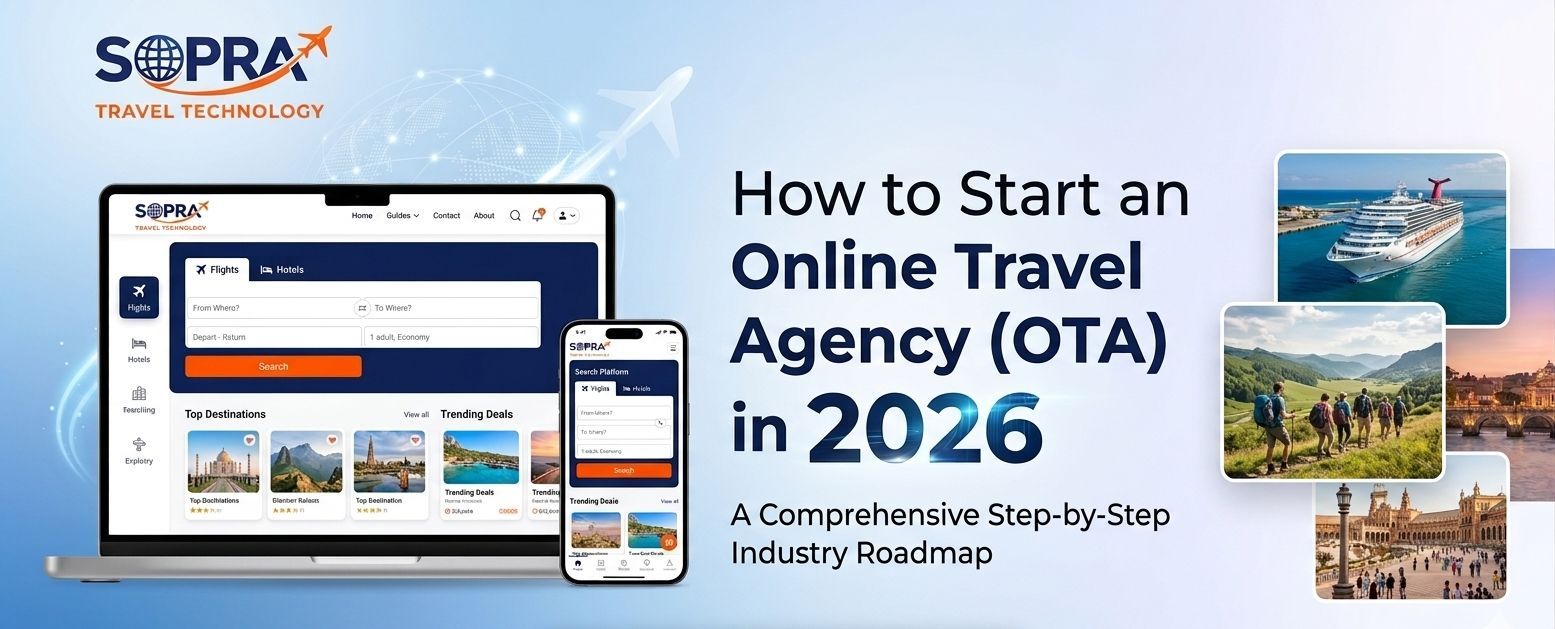
How to Start an Online Travel Agency (OTA) in 2026
The global travel industry has changed dramatically over the last few years. Travelers now expect instant flight search, real-time pricing, mobile booking, secure payments, and personalized travel experiences - all from a single platform.
This shift has created enormous opportunities for entrepreneurs, travel agencies, TMCs, and startups looking to launch their own Online Travel Agency (OTA).
Thanks to modern Airline Reservation Systems, GDS API Integration, NDC API Integration, and cloud-based travel technology, starting an OTA in 2026 is more achievable than ever before.
Whether you want to launch a flight booking portal, a corporate travel platform, or a niche travel marketplace, this guide explains everything you need to know to start an OTA business successfully.
What is an Online Travel Agency (OTA)?
An Online Travel Agency (OTA) is a digital travel platform that allows customers to search, compare, and book travel services online.
OTAs typically offer:
- Flight bookings
- Hotel reservations
- Holiday packages
- Transfers
- Visa services
- Insurance
- Corporate travel management
Modern OTAs connect directly with airline suppliers, GDS systems, NDC APIs, and third-party travel providers to display real-time travel inventory and pricing.
Popular OTA examples include:
- Booking.com
- Expedia
- MakeMyTrip
- Agoda
- Skyscanner
- Trip.com
However, the rise of API-first travel technology has made it possible for smaller travel businesses and startups to compete with specialized OTA platforms in niche markets.
Why 2026 is the Best Time to Start an OTA?
Growing Online Travel Demand
Travel booking behavior continues shifting toward digital-first platforms. Customers now prefer:
- Self-service booking
- Mobile-first experiences
- Instant ticket confirmation
- Dynamic pricing
- Flexible payment options
This trend creates strong opportunities for OTAs that can provide fast and reliable booking experiences.
Faster OTA Development Possibilities
Previously, building an OTA required massive infrastructure investments and long development cycles.
Today, businesses can launch an OTA much faster using:
- Airline Reservation Systems
- Flight Booking APIs
- GDS integrations
- NDC connectivity
- Cloud infrastructure
In many cases, OTA platforms can be launched in as early as 7 days depending on supplier readiness and customization scope.
Rise of NDC & Direct Airline Connectivity
Airlines increasingly prefer NDC (New Distribution Capability) because it allows richer content distribution, ancillary sales, branded fares, and direct customer engagement.
This means modern OTAs need strategies beyond traditional GDS connectivity.
Opportunities in Niche Travel Markets
Many large OTAs focus on volume, not specialization.
This creates opportunities in:
- Corporate travel
- Religious tourism
- Luxury travel
- Medical tourism
- Group travel
- Regional airline markets
- Student travel
- B2B travel distribution
Smaller OTAs with strong supplier strategies and specialized experiences can compete effectively.
Step-by-Step Guide to Start an OTA in 2026
Step 1: Choose Your OTA Business Model
Before building technology, define your business model clearly.
B2C OTA
Sell directly to travelers through your website or mobile app.
Best for:
- Flight booking portals
- Leisure travel
- Package holidays
B2B Travel Portal
Provide booking access to sub-agents and travel partners.
Best for:
- Consolidators
- Regional travel networks
- Wholesale distribution
B2B2C Travel Platform
Combine both agent and direct customer bookings under one platform.
Corporate Travel Platform
Focus on:
- employee travel
- approval workflows
- travel policies
- invoicing
- expense management
Your business model directly impacts your Airline Reservation System architecture and supplier strategy.
Step 2: Select Your Travel Niche
One of the biggest mistakes new OTAs make is trying to sell everything immediately.
Start with a focused niche.
Examples include:
- Flight-only OTA
- Domestic airline bookings
- GCC travel
- Luxury travel
- Umrah travel
- Student travel
- Corporate travel
- Group bookings
A focused niche simplifies:
- supplier negotiations
- marketing strategy
- technology requirements
- customer acquisition
Step 3: Register Your Travel Business
Your legal setup depends on your country and target market.
Common requirements include:
- Business registration
- GST/VAT registration
- Travel licenses
- Domain registration
- Payment gateway approvals
- Privacy policies
- Terms & conditions
If you plan to issue airline tickets directly, you may eventually need:
- IATA accreditation
- ARC accreditation
- BSP participation
However, many startups initially operate using consolidator APIs or non-IATA supplier partnerships.
Step 4: Understand Airline Supplier Connectivity
This is the most important technical decision when starting an OTA.
Your OTA's success heavily depends on:
- airline coverage
- fare competitiveness
- booking reliability
- API performance
Modern OTAs usually combine multiple inventory sources.
What is GDS API Integration?
GDS (Global Distribution System) platforms aggregate airline inventory from multiple airlines into one centralized booking network.
Major GDS providers include:
- Amadeus
- Sabre
- Travelport
- Galileo
GDS API Integration provides:
- real-time flight search
- airline schedules
- fare rules
- ticketing capabilities
- global airline inventory
GDS systems are still the backbone of many airline reservation platforms.
What is NDC API Integration?
NDC (New Distribution Capability) is a modern airline distribution standard developed by IATA.
Unlike traditional GDS systems, NDC APIs provide:
- branded fares
- ancillaries
- seat selection
- baggage options
- richer airline content
- personalized pricing
Many airlines now prioritize NDC channels for premium content distribution.
Modern OTAs increasingly combine:
- GDS APIs
- NDC APIs
- direct airline APIs
- LCC APIs
to maximize fare coverage and booking flexibility.
What are LCC APIs?
Low-cost carriers (LCCs) often distribute inventory outside traditional GDS systems.
Examples include:
- IndiGo
- AirAsia
- Ryanair
- SpiceJet
Direct LCC API Integration helps OTAs:
- improve regional coverage
- access exclusive fares
- reduce dependency on GDS channels
Step 5: Build Your Airline Reservation System
Your Airline Reservation System is the core of your OTA platform.
A modern Flight Booking System should support:
- Internet Booking Engine (IBE)
- Real-time flight search
- Multi-supplier aggregation
- Fare comparison
- Dynamic pricing
- Booking management
- E-ticket generation
- Cancellation workflows
- Refund management
- Multi-currency payments
- Reporting & analytics
Your OTA technology stack should also include:
- Admin dashboard
- Agent management
- Markup management
- Supplier controls
- API monitoring
- Security protection
Scalable architecture is critical because flight search traffic can grow very quickly.
Step 6: Setup Payment Gateway Integration
Travel businesses process high-value international transactions, making payment infrastructure extremely important.
Your OTA should support:
- Multi-currency payments
- Credit/debit cards
- Wallets
- UPI
- Regional payment gateways
- 3DS2 authentication
- Fraud prevention
Payment flexibility improves customer conversion significantly.
Step 7: Focus on User Experience & Mobile Booking
Travel booking decisions are highly sensitive to:
- speed
- pricing transparency
- trust
- simplicity
A slow or confusing booking flow can destroy conversions.
Your OTA platform should prioritize:
- Mobile responsiveness
- Fast flight search
- Clean checkout flow
- Simple itinerary display
- Secure booking process
Modern travelers expect experiences comparable to major global OTAs.
Step 8: Launch Your OTA Marketing Strategy
Technology alone will not generate bookings.
Successful OTAs invest heavily in:
- SEO
- Google Ads
- Meta search integrations
- Affiliate partnerships
- Social media
- Email marketing
- Retargeting campaigns
Long-term SEO is especially important because travel search traffic has extremely high commercial intent.
Essential Features Every OTA Needs
Real-Time Flight Search
Users expect instant access to live airline inventory and pricing.
Multi-Supplier Aggregation
Your system should combine:
- GDS
- NDC
- LCC
- consolidators
- third-party APIs
into a single booking experience.
Dynamic Markup Management
Control pricing based on:
- routes
- suppliers
- agents
- customer types
- regions
Booking Management
Allow customers and agents to:
- modify bookings
- cancel tickets
- request refunds
- access itineraries
Reporting & Analytics
Analytics help optimize:
- conversion rates
- supplier performance
- booking trends
- revenue growth
Secure Payment Infrastructure
Security and fraud prevention are critical in airline booking systems.
Common Challenges When Starting an OTA
Supplier Approval Delays
GDS and airline approvals may take time depending on contracts and compliance requirements.
Managing Multiple APIs
Every supplier behaves differently. Managing errors, fare changes, and ticketing logic requires experience.
Competition from Large OTAs
Large OTAs dominate generic search markets. Smaller OTAs need specialization and better customer experience.
Technology Complexity
Airline booking workflows are much more complex than standard eCommerce systems.
Scaling Infrastructure
Flight search generates heavy traffic loads. Poor architecture can cause downtime and booking failures.
Working with an experienced travel technology company significantly reduces these risks.
How Much Does it Cost to Start an OTA in 2026?
OTA costs vary depending on:
- business model
- supplier integrations
- customization level
- traffic expectations
- operational scope
Typical cost areas include:
- OTA platform development
- Airline Reservation System
- GDS API fees
- NDC integration
- Hosting infrastructure
- Payment gateway setup
- Marketing
- Support & maintenance
Many startups begin lean with:
- one supplier
- one market
- one travel vertical
and expand gradually.
Why Airline Reservation System Strategy Matters Most
Many OTA founders focus only on website design.
However, long-term OTA success depends more on:
- supplier strategy
- inventory coverage
- booking speed
- fare competitiveness
- API stability
- scalability
Your Airline Reservation System is the operational backbone of your OTA business.
A poorly designed system creates:
- failed bookings
- pricing mismatches
- customer complaints
- refund issues
- operational inefficiencies
Choosing the right travel technology partner is therefore one of the most important business decisions during OTA setup.
How Sopra Travel Technology Helps OTAs Launch Faster
Sopra Travel Technology helps travel businesses build scalable OTA platforms with:
- Airline Reservation System development
- Flight Booking System development
- GDS API Integration
- NDC API Integration
- LCC API Integration
- Payment gateway integration
- B2B & B2C booking engines
- Meta search integrations
- OTA customization
- Post-launch support
Our solutions are designed for:
- OTAs
- travel agencies
- TMCs
- startups
- consolidators
We help businesses launch modern OTA platforms with scalable architecture and real-time airline connectivity.
Depending on supplier readiness and project scope, OTA platforms can be deployed in as early as 7 days.
Final Thoughts
Starting an Online Travel Agency in 2026 is no longer limited to massive enterprises with huge infrastructure budgets.
With modern Airline Reservation Systems, GDS API Integration, NDC connectivity, and scalable cloud infrastructure, travel startups and agencies can now build highly competitive OTA platforms faster than ever before.
However, successful OTAs are not built on website design alone.
They are built on:
- strong supplier strategy
- scalable booking technology
- reliable API integrations
- operational efficiency
- customer trust
Whether you are launching a flight booking portal, B2B travel platform, or corporate booking engine, choosing the right technology foundation will directly impact your growth potential.
If you are planning to start an OTA business, now is the right time to build a future-ready travel platform.
Launch your OTA with scalable Airline Reservation System, GDS, NDC, and flight API integration technology designed for modern travel businesses.
Considering the next evolution of your booking architecture?
We invite you to an open, confidential discussion about your strategic goals. Together, we can review your existing infrastructure, explore modern solutions that align with your vision, and draft a high-level roadmap for your next phase of growth—with absolutely no obligation to partner with us.
View More Articles
Google Flights API
Instead of being a traditional airline reservation system or GDS, Google Flights helps travelers discover and compare flight options from airlines, OTAs and other travel partners.

Sabre API Integration for Tour Operators
Discover how Sabre API integration can help tour operators build flight, hotel, cruise and multi-product booking platforms with scalable travel technology.

Sabre Api Integration Guide
Learn how Sabre API integration works for travel businesses. Explore flight search, booking, PNR management, architecture, certification requirements, challenges and implementation planning.

Launch Online Travel Business Without White Label
Launch an Online Travel Business in One Week Without Being Locked Into a White-Label Platform

How to Start an Online Flight Booking Business
Learn how to start an online flight booking business with limited upfront investment, including GDS/API options, technology costs, MVP strategy and partnership models.

Holiday Program Booking Software For Travel Agents And OTAS
Discover holiday program booking software with a powerful B2C & B2B holiday package builder. Let customers create, customize, and book holiday packages online.

Travel Portal Solution Comparison Guide
Travel Portal Solution Comparison Guide: How to Choose the Right Platform for Your Travel Business
Airline Reservation System Trends 2026 and Beyond
Elevating Air Travel: The Indispensable Role of Advanced Airline Reservation Systems in 2026 and Beyond
Travel Portal Solution Checklist
Choosing the Right Travel Technology Partner? 16 Questions Every Travel Agency & OTA Should Ask Before Choosing a Technology Partner & Avoid Costly Mistakes.
Why Every Travel Agency Needs a Holiday Package Builder in 2026
Learn how Holiday Package Builder Software helps travel agencies and OTAs automate package creation, increase bookings, improve customer experience, and grow revenue.
FAQs (Frequently Asked Questions)
Do I need IATA accreditation to start an OTA?
No. Many startups initially use consolidators or non-IATA supplier integrations before obtaining direct accreditation.
Which is better: GDS or NDC?
Both are important. Most modern OTAs use hybrid strategies combining GDS, NDC, and direct airline APIs.
How long does OTA development take?
It depends on customization and supplier readiness. Standard OTA deployments can be launched much faster today compared to traditional development cycles.
Can I start with one supplier?
Yes. Many successful OTAs begin with one supplier and gradually expand inventory sources.
What is the most important part of an OTA?
The Airline Reservation System and supplier connectivity strategy are the most critical operational components.