
Launch an Online Travel Business in One Week - Without Being Locked Into a White-Label Platform
Starting or expanding an online travel business often appears to involve an uncomfortable choice.
On one side, you can invest significant time and money building a completely new travel booking platform from scratch.
On the other, you can choose a white-label travel portal and launch quickly—but potentially become dependent on a technology provider for important aspects of your business, platform and future development.
But there is another option.
You can launch quickly with a ready-to-use airline reservation system without building your entire business on a traditional white-label platform.
For offline travel agencies moving online, travel startups entering the market or established agencies looking to expand into new markets, this approach can provide a practical balance between speed, lower initial investment, technology independence and long-term business control.
With the right travel technology foundation, GDS API connectivity and business configuration, an online travel booking business can potentially be prepared for launch in as little as one week.
More importantly, a fast launch does not have to mean giving up control of your technology, business operations, customer data or future growth.
Launch fast. Build your business your way. Maintain control for the future.
The Problem with the Traditional Choices
For years, travel businesses looking to go online have generally considered two options.
Option 1: Build Everything from Scratch
Custom travel portal development provides a high degree of flexibility, but it can require substantial upfront investment and time.
The business may need to develop or integrate:
- Flight search and booking functionality
- Airline or GDS API connectivity
- Fare and availability workflows
- Booking management
- Customer accounts
- Administration tools
- B2B agent functionality
- Payment workflows
- Dynamic holiday package functionality
- Reporting and operational features
Before the first customer can make a booking, the project may already have consumed months of planning, development and testing.
For a startup or an offline travel agency, this can create a major barrier to entering the online market.
Option 2: Choose a White-Label Travel Portal
The alternative is often a white-label travel solution.
This can offer a faster route to market, but businesses should carefully understand what they are signing up for.
In a traditional white-label model, the technology provider generally owns and controls the underlying platform. The travel agency receives a branded version of that platform and operates within the provider's technology environment.
This may be suitable for some businesses. However, for an agency with long-term growth ambitions, questions can eventually arise.
What happens when you need a new feature?
Can you make changes independently?
Can you integrate a new API or supplier?
Who controls the platform roadmap?
What happens if you want to change technology providers?
What level of control do you have over your deployment, data and operational environment?
How dependent is your business on one technology provider?
These questions often become more important as a travel business grows.
A platform that helped you launch quickly in the beginning can eventually become a limitation if the business cannot evolve beyond the capabilities and commercial structure defined by the white-label provider.
Ready to Use Does Not Have to Mean White Label
This is where a different approach to travel technology becomes important.
A ready-to-use airline reservation system does not have to mean that your business is simply renting a branded version of someone else's restricted platform.
The technology foundation can already be developed and operational, allowing your business to avoid spending months building basic booking functionality from scratch.
At the same time, the solution can be deployed and configured around your business requirements rather than forcing your business into a fixed white-label model.
This gives travel businesses an important combination:
Speed of an established solution + greater business and technology control
The objective is not to make every customer start with an empty development project.
The objective is to provide an established technology foundation that can be configured, deployed, integrated and expanded according to the business requirements.
In simple terms:
You do not need to build everything from zero to avoid becoming locked into a white-label platform.
Why Technology Control Matters for a Travel Business
A travel booking website is no longer simply a marketing website.
For an online travel agency, the technology platform becomes part of the core business infrastructure.
It manages or supports activities such as:
- Customer searches
- Flight availability
- Pricing and markups
- Booking workflows
- Customer information
- Reservation records
- Supplier connectivity
- Business rules
- Administrative processes
- Agent operations
- Future product expansion
As the business grows, control over this infrastructure becomes increasingly important.
A travel agency should think beyond the initial launch.
The better question is not only:
"How quickly can we launch?"
It should also be:
"How much control will we have when our business grows?"
A ready-to-use travel technology solution can help businesses answer both questions positively.
Greater Control Over Your Business and Technology
The goal is to give the travel business the ability to operate on an established technology foundation while maintaining appropriate control over the areas that matter to its business.
Depending on the selected deployment, infrastructure and commercial model, this can include greater control over:
- Platform configuration
- Business rules
- Product features
- Booking workflows
- Branding and customer experience
- Third-party API integrations
- Supplier connectivity
- User and administrative access
- Future development
- Deployment and infrastructure choices
- Security configuration
- Data access and management policies
This is fundamentally different from the idea that a business must simply wait for a white-label provider to decide whether a new capability should be added to the platform.
Your travel business can begin with existing technology while retaining the flexibility to develop and evolve according to your own strategy.
Your Business Data, Customer Relationships and Privacy Matter
For a travel company, customer and booking information are important business assets.
As your online business grows, you need clear visibility into how data is managed and what level of control your organisation has over its operational environment.
This includes information relating to:
- Customers
- Passenger details
- Bookings
- Travel preferences
- Agent activity
- Business operations
- Supplier transactions
Privacy and security requirements can also vary based on the markets in which a business operates.
A technology model that provides appropriate business control can make it easier to establish processes around:
- Data access
- User permissions
- Administrative responsibilities
- Privacy policies
- Operational security
- Infrastructure management
- Backup procedures
The exact level of control depends on the deployment and project scope, but the principle remains important:
Your technology should support your business independence—not unnecessarily limit it.
Security Cannot Be an Afterthought
A fast launch should not mean compromising on security.
Online travel businesses process important customer and booking information and connect with multiple external systems.
Security therefore needs to be considered as part of the overall technology architecture.
Depending on the selected deployment model and requirements, businesses can define appropriate approaches for:
- Hosting and infrastructure
- Administrative access
- User roles and permissions
- API security
- Integration access
- Data protection
- Security monitoring
- Backup and recovery procedures
- Privacy and operational policies
The advantage of moving beyond a completely restricted white-label approach is the ability to design the operational and technical environment around the requirements of the business.
A Practical Alternative for Businesses Looking to Switch from a White-Label Portal
This approach is not only relevant to new travel startups.
It can also be attractive for businesses already operating with a white-label travel portal.
Many agencies initially choose a white-label solution because it offers a quick and affordable way to enter the online market.
That decision may make perfect sense at the beginning.
However, as the agency grows, it may experience challenges such as:
- Limited customization
- Delays in implementing requested features
- Restricted integration options
- Dependence on the provider's development roadmap
- Limited flexibility in business workflows
- Difficulty differentiating from competitors
- Concerns about long-term platform dependency
At that stage, the agency does not necessarily want to start from the beginning and build an entirely new system.
A ready-to-use airline reservation system can provide a practical migration path.
The business can move towards a more independent technology model while still benefiting from an established booking platform and existing functionality.
Instead of choosing between:
Continue with a restrictive platform
or
Spend months rebuilding everything from scratch
there can be a third option:
Move to an established travel technology foundation that can be deployed and developed around your own business.
A Faster Way for Offline Travel Agencies to Go Online
For offline travel agencies, going online can sometimes feel like a complete technology transformation.
In reality, the agency may already have most of the business capabilities required for success.
It may have:
- Travel industry experience
- Existing customers
- Supplier relationships
- Destination knowledge
- Sales and support teams
- Repeat customers
- Referral networks
What it may not have is an effective digital booking channel.
A ready-to-use airline reservation system can provide the technology foundation required to bring the existing business online.
The agency can begin offering customers the ability to search and book travel online while continuing to use its existing industry expertise and operational strengths.
This can create a practical transition:
Offline Travel Agency → Online Booking Platform → Digital Customer Acquisition → Scalable Travel Business
The business does not need to abandon its existing model.
It simply gains another channel through which to sell and grow.
A Strong Starting Point for Travel Startups
For a travel startup, speed is important.
But long-term flexibility is equally important.
A startup does not want to spend its entire initial budget on technology development before it has validated its market.
At the same time, an ambitious startup may not want to build its future entirely on a platform over which it has limited control.
A ready-to-use travel technology foundation provides an alternative.
The startup can begin with existing booking functionality and required integrations while concentrating its resources on:
- Market research
- Product positioning
- Customer acquisition
- Branding
- Digital marketing
- Partnerships
- Customer service
- Business growth
The technology can then continue to evolve as the business develops.
This makes it possible to follow a practical approach:
Start with what you need. Launch quickly. Learn from the market. Expand strategically.
Supporting USA Outbound Flight Opportunities
For businesses targeting outbound travel from the United States, the technology platform needs to support the relevant flight content and booking requirements for the selected market.
The right solution can combine:
- GDS API connectivity
- Relevant flight content
- Online flight search
- Availability and fare workflows
- Reservation capabilities
- Pricing and markup configuration
- Booking administration
The objective is to provide the travel business with the technology foundation needed to create and operate a USA-focused online flight booking platform without requiring a completely new development project.
The business can then configure and expand the solution according to its customer segment and commercial strategy.
Supporting UK Outbound Flight Opportunities
The same model can support businesses targeting outbound travel from the United Kingdom.
Travel agencies and startups may want to focus on travelers departing from UK airports while providing access to international travel options through appropriate GDS and API connectivity.
A ready-to-use UK-focused travel booking platform can provide a faster route to market by combining:
- Flight search and booking technology
- Relevant GDS API connectivity
- Fare and availability workflows
- Business pricing configuration
- Reservation management
- Administrative tools
Instead of spending months creating the core booking infrastructure, the business can concentrate on building its customer base and market presence.
Go Beyond Flights with Dynamic Holiday Package Booking
An online travel business does not have to remain limited to selling flights.
As the business grows, it may want to offer customers a broader range of travel products.
This is where a dynamic holiday package booking system becomes valuable.
The platform can support the ability to combine travel products based on availability and business requirements.
Depending on the selected integrations and product configuration, customers may be able to create or purchase packages involving:
- Flights
- Hotels
- Transfers
- Activities
- Additional travel services
This can create opportunities to increase the value of each booking and provide customers with a more complete travel planning experience.
A business can therefore follow a phased growth model:
Phase 1 — Launch Online Flight Booking
↓
Phase 2 — Add Additional Travel Products
↓
Phase 3 — Introduce Dynamic Holiday Packages
↓
Phase 4 — Expand into B2B Agent Sales
↓
Phase 5 — Add New Markets, APIs and Products
The technology foundation should support this evolution rather than requiring the business to replace its platform every time its strategy changes.
Launch an Online Travel Business in as Little as One Week
One of the biggest advantages of using an established technology foundation is implementation speed.
The core airline reservation system and travel technology components are already available.
This means the project can focus on configuration, integration and preparation rather than building every booking function from scratch.
A typical rapid-launch process may include:
Step 1: Define Your Business and Target Market
Identify the target customers, geographical market, business model and required travel products.
Step 2: Prepare and Configure the Travel Platform
Configure the ready-to-use travel technology solution according to your business and operational requirements.
Step 3: Configure GDS and API Connectivity
Set up the required flight content, GDS API connectivity and supplier integrations based on the selected market and business model.
Step 4: Configure Commercial Rules
Configure relevant markups, pricing rules and business processes.
Step 5: Add Dynamic Holiday Package Capabilities
Where required, configure dynamic holiday package functionality and additional travel products.
Step 6: Test the Booking and Operational Workflow
Test the customer journey, booking process and administrative workflows before going live.
Step 7: Prepare for Launch
Complete final checks and prepare the online travel booking business for production.
Depending on the selected configuration, required integrations, commercial approvals and customization requirements, a rapid implementation can potentially allow a business to launch in as little as one week.
Ready to Use Today. Flexible for Tomorrow.
A ready-to-use travel platform should not mean a fixed platform that never changes.
The most valuable technology approach is one that provides immediate functionality while allowing the business to evolve.
Your business may begin with a simple online flight booking model today.
Tomorrow, you may want to add:
- New GDS or API integrations
- Hotel connectivity
- Dynamic holiday packages
- B2B agent functionality
- New source markets
- Additional languages
- Custom booking workflows
- Automation and AI-enabled services
Starting with an established technology foundation can make the first launch faster.
Maintaining flexibility can make future growth easier.
That combination is particularly important for travel companies that see technology as a long-term business asset rather than simply a website.
Who Is This Solution For?
This model can be particularly suitable for:
Offline Travel Agencies Going Online
Businesses that already have customers and travel expertise but need a digital booking platform.
New Travel Startups
Entrepreneurs who want to launch quickly without investing months in custom development or becoming unnecessarily dependent on a restrictive white-label model.
Existing Agencies Switching from White-Label Platforms
Businesses that have outgrown the limitations of their existing platform and want more flexibility and independence.
Travel Businesses Expanding into New Markets
Companies targeting selected outbound travel markets, including USA and UK opportunities.
Businesses Looking to Sell More Than Flights
Travel companies that want to combine airline booking capabilities with dynamic holiday package technology.
Launch Fast Without Giving Up Your Future
Choosing travel technology is not simply a decision about how your website looks today.
It is a decision about how your business will operate tomorrow.
A completely custom platform may provide maximum flexibility but can require a long and expensive development journey.
A traditional white-label platform may provide speed but can create dependency and limitations as the business grows.
A ready-to-use travel technology foundation can offer a different path.
You can start with an established airline reservation system, configure the solution for your market and business model, connect the required travel content and prepare for a rapid launch.
At the same time, you can retain the ability to develop, integrate and evolve your technology according to your own business strategy.
You do not have to choose between speed and control.
You can launch quickly without starting from zero—and grow without being unnecessarily locked into a traditional white-label platform.
Ready to Take Your Travel Business Online?
Whether you are an offline travel agency ready to sell online, a travel startup preparing for launch or an established business considering a move away from a restrictive white-label travel portal, the first step is to understand the right technology model for your business.
Sopra Travel Technology provides ready-to-use travel technology solutions, including airline reservation systems, GDS API integration and dynamic holiday package booking capabilities.
Our approach is designed to help travel businesses reduce development time and upfront technology investment while providing a flexible foundation for future growth.
If you are planning to launch an online travel booking business or considering switching from your existing travel technology platform, we can help you evaluate the requirements and identify a practical path towards a faster and more independent technology solution.
Launch faster. Maintain greater control. Build your travel business for the future.
Considering the next evolution of your booking architecture?
We invite you to an open, confidential discussion about your strategic goals. Together, we can review your existing infrastructure, explore modern solutions that align with your vision, and draft a high-level roadmap for your next phase of growth—with absolutely no obligation to partner with us.
View More Articles
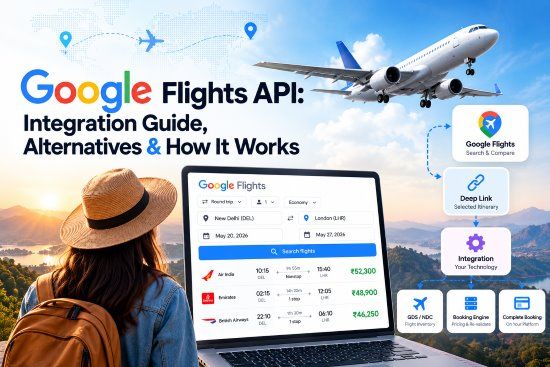
Google Flights API
Instead of being a traditional airline reservation system or GDS, Google Flights helps travelers discover and compare flight options from airlines, OTAs and other travel partners.

Sabre API Integration for Tour Operators
Discover how Sabre API integration can help tour operators build flight, hotel, cruise and multi-product booking platforms with scalable travel technology.

Sabre Api Integration Guide
Learn how Sabre API integration works for travel businesses. Explore flight search, booking, PNR management, architecture, certification requirements, challenges and implementation planning.

How to Start an Online Flight Booking Business
Learn how to start an online flight booking business with limited upfront investment, including GDS/API options, technology costs, MVP strategy and partnership models.

Holiday Program Booking Software For Travel Agents And OTAS
Discover holiday program booking software with a powerful B2C & B2B holiday package builder. Let customers create, customize, and book holiday packages online.

Travel Portal Solution Comparison Guide
Travel Portal Solution Comparison Guide: How to Choose the Right Platform for Your Travel Business
Airline Reservation System Trends 2026 and Beyond
Elevating Air Travel: The Indispensable Role of Advanced Airline Reservation Systems in 2026 and Beyond
Travel Portal Solution Checklist
Choosing the Right Travel Technology Partner? 16 Questions Every Travel Agency & OTA Should Ask Before Choosing a Technology Partner & Avoid Costly Mistakes.
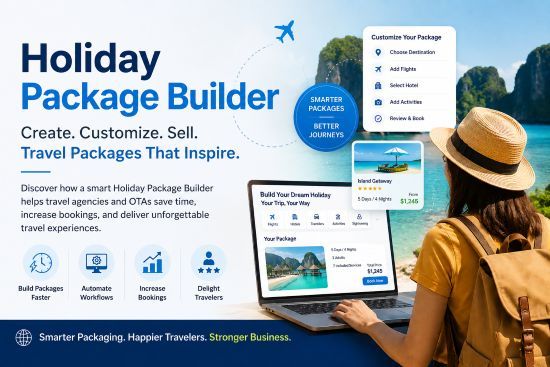
Why Every Travel Agency Needs a Holiday Package Builder in 2026
Learn how Holiday Package Builder Software helps travel agencies and OTAs automate package creation, increase bookings, improve customer experience, and grow revenue.

how to build right travel portal solution for your travel agency
Sopra Travel Technology builds advanced Flight Booking Portals and Travel Technology Platforms designed for travel agencies, OTAs, consolidators, tour operators, startups, and enterprise travel companies worldwide.